acbragajunior
Student
Hi everyone,
First post here, though I've been reading the forum for a long time. I'm Antonio, from Brazil, an arcade PCB collector and restorer (120+ boards) working under the name Stark Retro Lab. My main project is designing protective cases for arcade PCBs, and I'd like to share the two I've completed most recently: CPS2 and CPS3.
A key point about the process: every case is designed from scratch, measured directly from my own original hardware (no downloaded STLs). Printed in carbon fiber-filled PETG (PETG-CF), engineered to millimeter tolerances. The goal is to turn a bare, fragile board into a plug-and-play "arcade cartridge" for supergun setups protected, ventilated, and with every function accessible without opening the case.
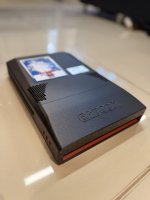
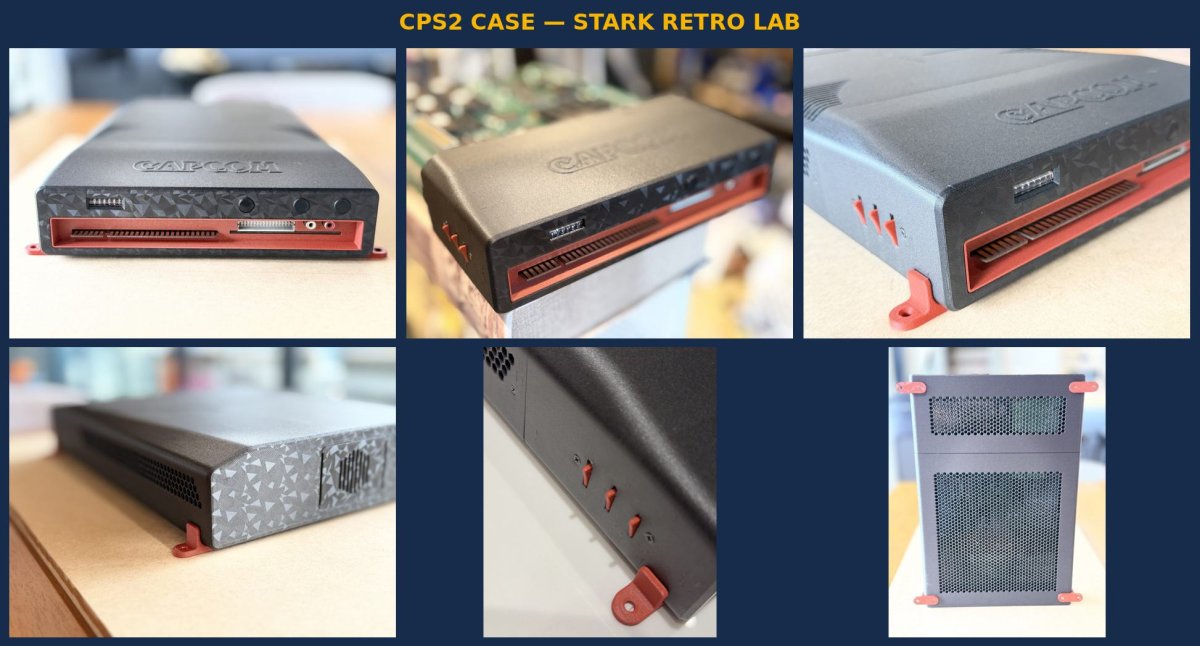
CPS2 case (finished design):
• Themed per game: the top face carries a multi-color 3D-printed art plaque (relief-printed, lithophane-style) reproducing the game's artwork.
• Multiple color schemes: classic black with red accents, or full custom colors.
• Functional external volume and service buttons that actuate the board's own switches.
• Hexagonal mesh ventilation and a removable, magnetically mounted fan module with a genuine Noctua NF-A4x10 attached to the case structure, never to the PCB, so no vibration reaches the board or its solder joints.
• Coin counter window and contrasting color frame around the rear cutouts, echoing the original A/B board color coding.
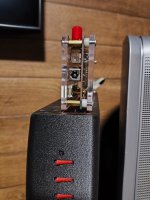
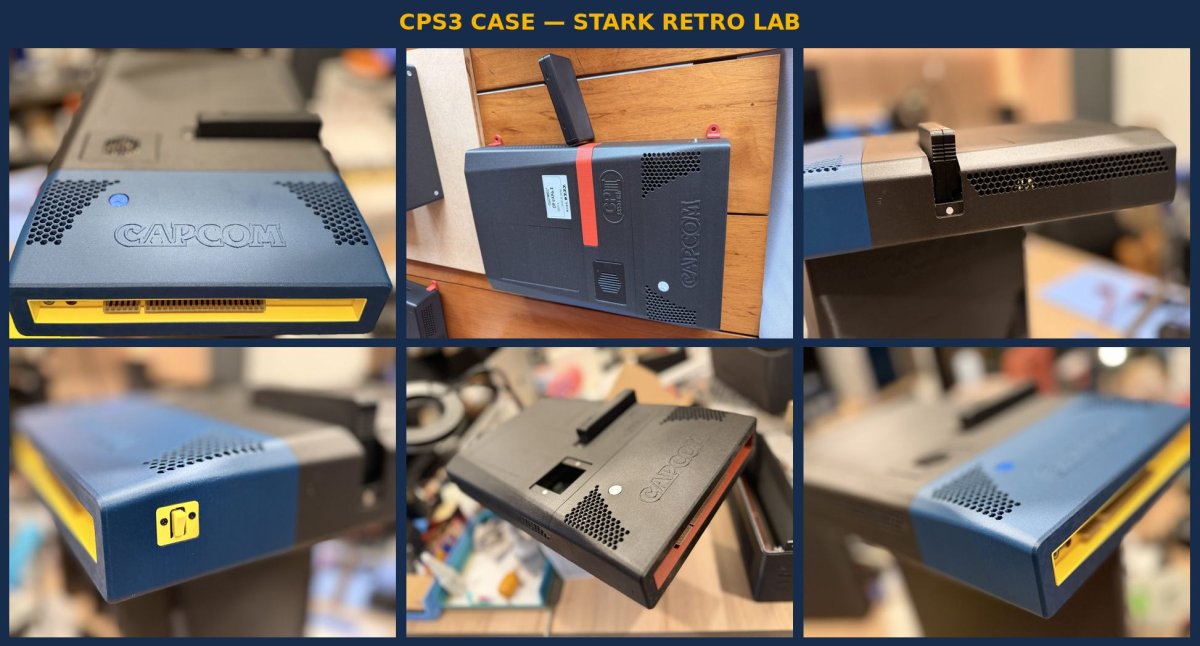
CPS3 case (new, functional prototype):
• Same design language: engraved logo, hex mesh, contrasting yellow frame around the JAMMA edge.
• External SERVICE slider on the side panel, actuating the board's own switch.
• Volume knob extender on top: a printed piece that sits over the board's own volume pot and extends it through the case — same approach as Capcom's own CPS 1.5 "Dash" style case — so you can adjust volume easily and intuitively without opening anything.
• Security cartridge access button on top, mirroring the CPS2 layout.
• Magnetic rear access door with a flat cable slot this allows an ODE (BlueSCSI / ZuluSCSI family) to run with zero permanent modification. The ribbon exits cleanly through the slot; the door closes flush if you're using the original SCSI drive.
• A modular ODE mini-case with magnetic feet is in development, docking inside and supporting both common ODE footprints via swappable trays.
• Dimensions verified across -2/-3/-4 revisions, with clearance for recapped -2 boards and bodge wires.
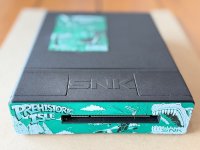
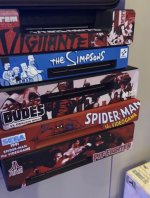
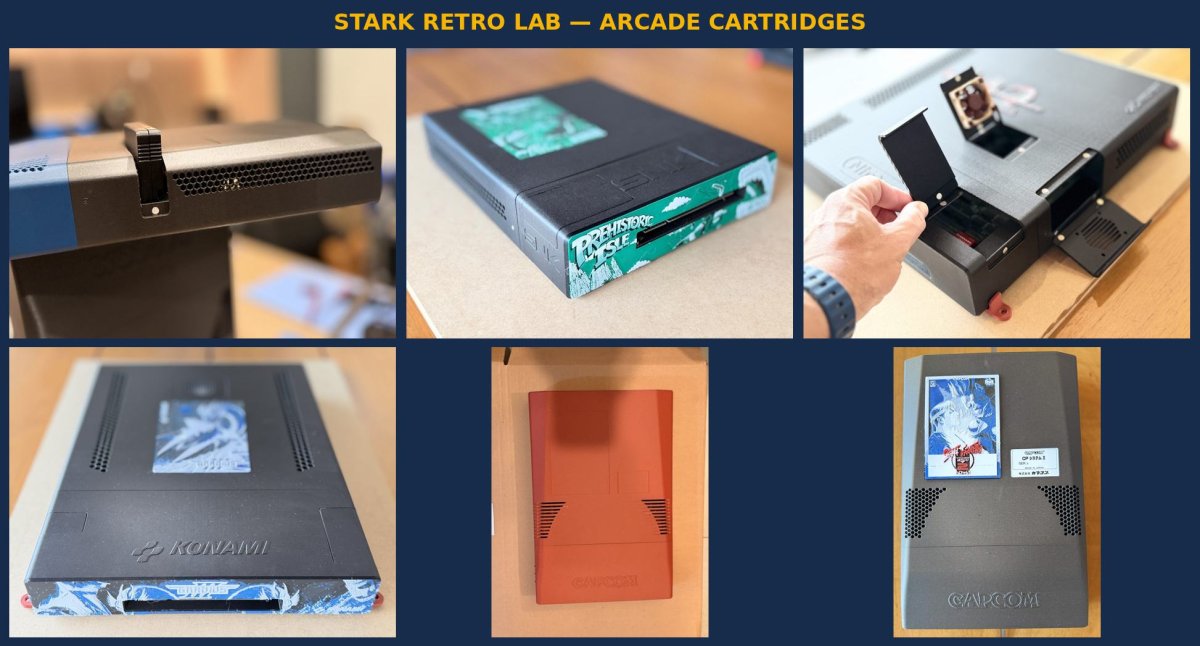
Beyond these two, I already have 80+ finished case designs covering boards across the entire Konami, Sega and Data East families, the Double Dragon family, SNK pre-Neo Geo hardware, and Killer Instinct that one with active cooling in a positive-pressure dual-fan layout to protect the R4600 from heat, plus magnetic access hatches for the fan and dipswitches. And it's not just the usual suspects: I've designed cases for boards that rarely get this kind of attention, like Gradius III, Solomon's Key, Prehistoric Isle, and even older hardware like Great Swordsman. Non-JAMMA boards get a built-in adapter embedded in the case, so everything comes out the other side as a standard JAMMA "cartridge". A few examples below — I'll dedicate proper threads to these in future posts.
Feedback is very welcome especially from CPS2/CPS3 owners on features you'd want in future revisions.
Cheers,
Antonio [Stark Retro Lab]
First post here, though I've been reading the forum for a long time. I'm Antonio, from Brazil, an arcade PCB collector and restorer (120+ boards) working under the name Stark Retro Lab. My main project is designing protective cases for arcade PCBs, and I'd like to share the two I've completed most recently: CPS2 and CPS3.
A key point about the process: every case is designed from scratch, measured directly from my own original hardware (no downloaded STLs). Printed in carbon fiber-filled PETG (PETG-CF), engineered to millimeter tolerances. The goal is to turn a bare, fragile board into a plug-and-play "arcade cartridge" for supergun setups protected, ventilated, and with every function accessible without opening the case.
CPS2 case (finished design):
• Themed per game: the top face carries a multi-color 3D-printed art plaque (relief-printed, lithophane-style) reproducing the game's artwork.
• Multiple color schemes: classic black with red accents, or full custom colors.
• Functional external volume and service buttons that actuate the board's own switches.
• Hexagonal mesh ventilation and a removable, magnetically mounted fan module with a genuine Noctua NF-A4x10 attached to the case structure, never to the PCB, so no vibration reaches the board or its solder joints.
• Coin counter window and contrasting color frame around the rear cutouts, echoing the original A/B board color coding.
CPS3 case (new, functional prototype):
• Same design language: engraved logo, hex mesh, contrasting yellow frame around the JAMMA edge.
• External SERVICE slider on the side panel, actuating the board's own switch.
• Volume knob extender on top: a printed piece that sits over the board's own volume pot and extends it through the case — same approach as Capcom's own CPS 1.5 "Dash" style case — so you can adjust volume easily and intuitively without opening anything.
• Security cartridge access button on top, mirroring the CPS2 layout.
• Magnetic rear access door with a flat cable slot this allows an ODE (BlueSCSI / ZuluSCSI family) to run with zero permanent modification. The ribbon exits cleanly through the slot; the door closes flush if you're using the original SCSI drive.
• A modular ODE mini-case with magnetic feet is in development, docking inside and supporting both common ODE footprints via swappable trays.
• Dimensions verified across -2/-3/-4 revisions, with clearance for recapped -2 boards and bodge wires.
Beyond these two, I already have 80+ finished case designs covering boards across the entire Konami, Sega and Data East families, the Double Dragon family, SNK pre-Neo Geo hardware, and Killer Instinct that one with active cooling in a positive-pressure dual-fan layout to protect the R4600 from heat, plus magnetic access hatches for the fan and dipswitches. And it's not just the usual suspects: I've designed cases for boards that rarely get this kind of attention, like Gradius III, Solomon's Key, Prehistoric Isle, and even older hardware like Great Swordsman. Non-JAMMA boards get a built-in adapter embedded in the case, so everything comes out the other side as a standard JAMMA "cartridge". A few examples below — I'll dedicate proper threads to these in future posts.
Feedback is very welcome especially from CPS2/CPS3 owners on features you'd want in future revisions.
Cheers,
Antonio [Stark Retro Lab]